Building a cast that stays the same
Sixty-nine starting characters, thirteen ethnicities, sixty-four settings — and a text box that overrides all of it. How Character Studio builds a person you can carry through an entire campaign without their face changing between shots.
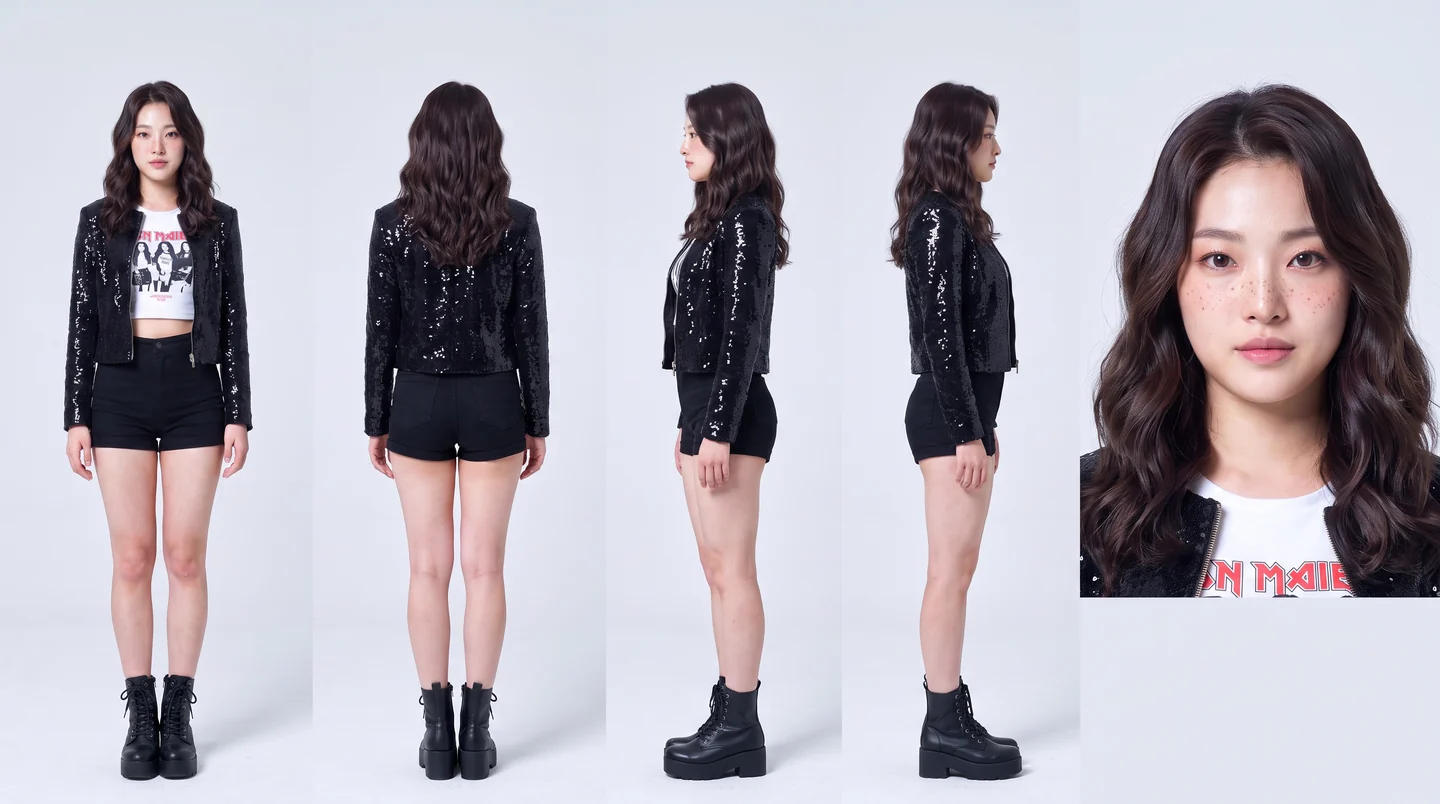
The hard part of an ad with a person in it is not making one good picture of them. It is making the second one.
Generate a woman in a kitchen, then generate the same woman in a car, and you get two different women. Slightly different nose, different jawline, different age. Nobody watching could tell you what changed, but everybody can tell that something did.
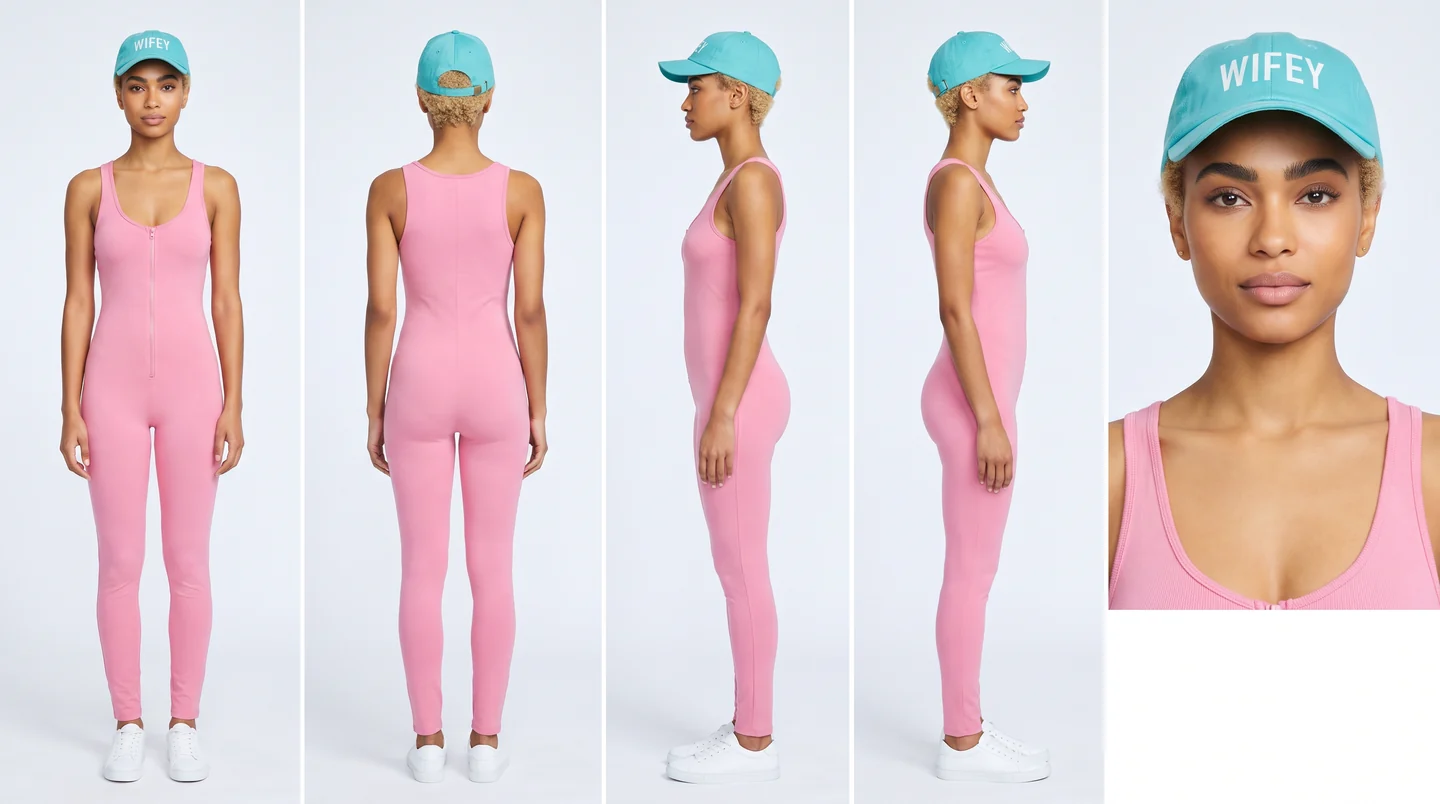
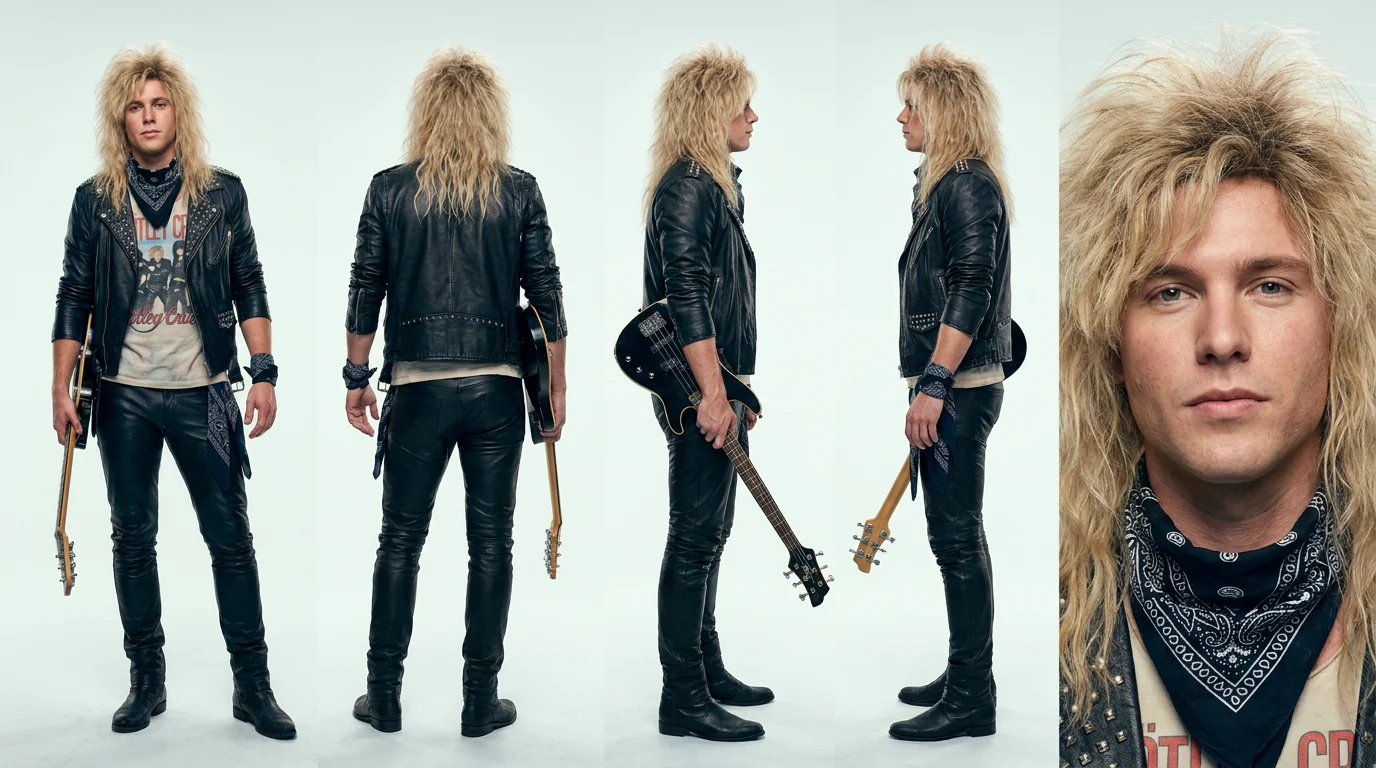
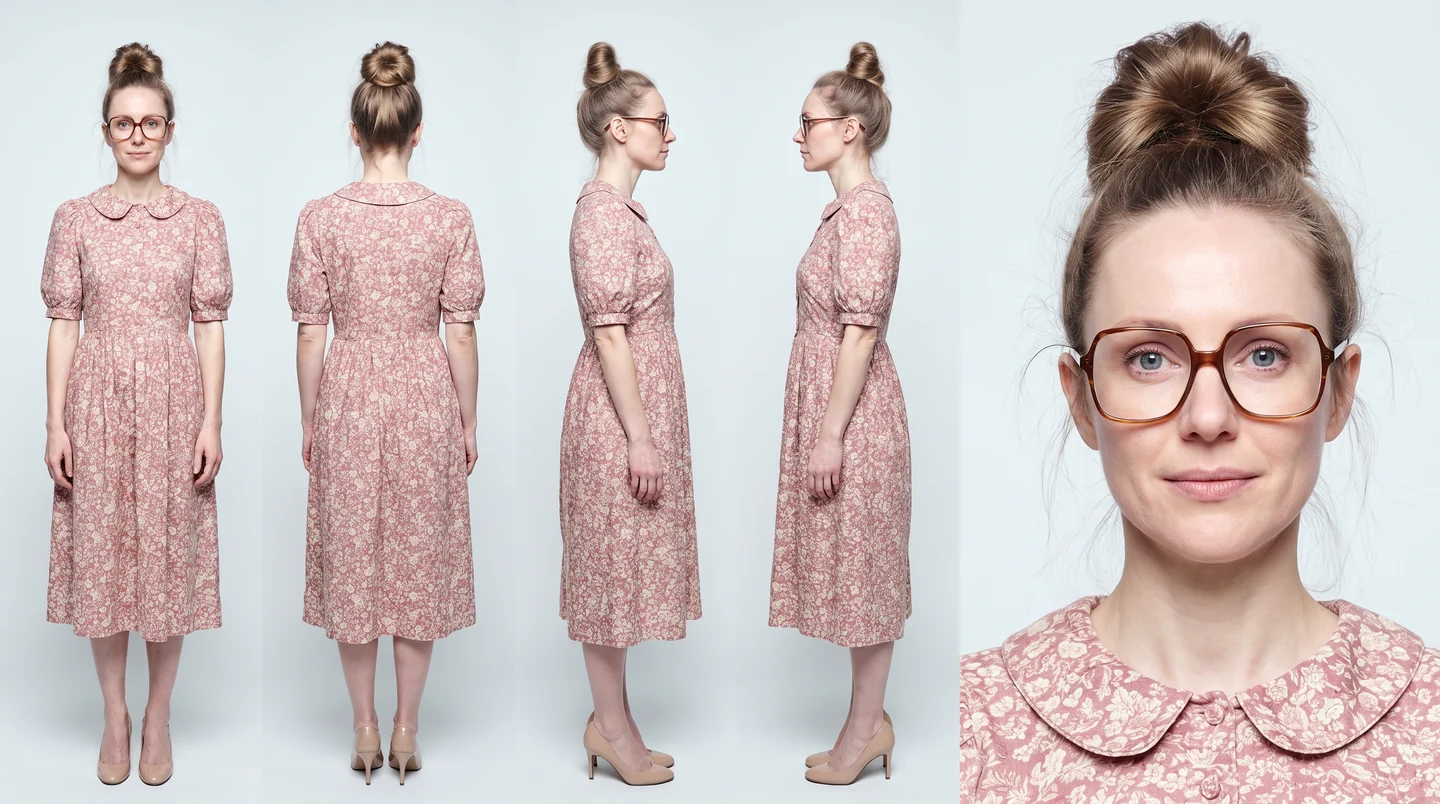
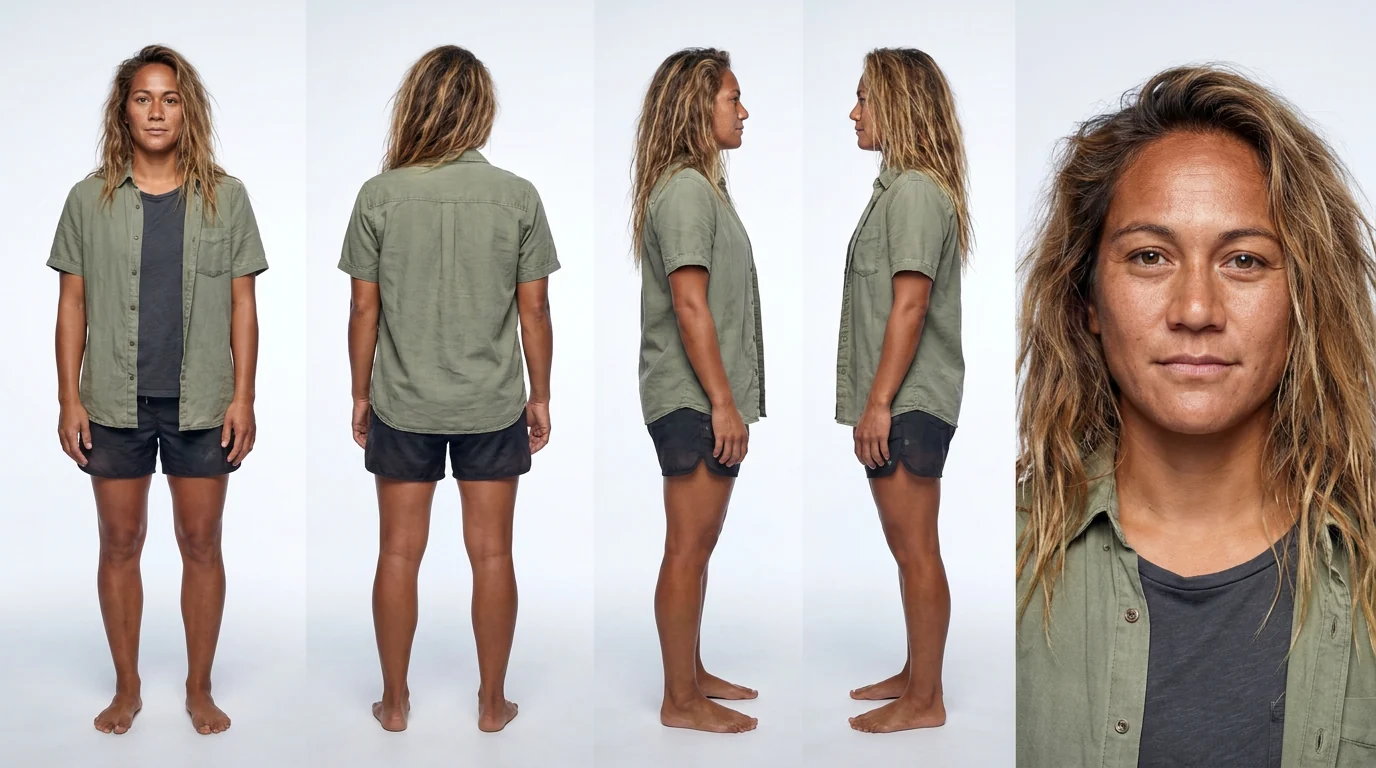
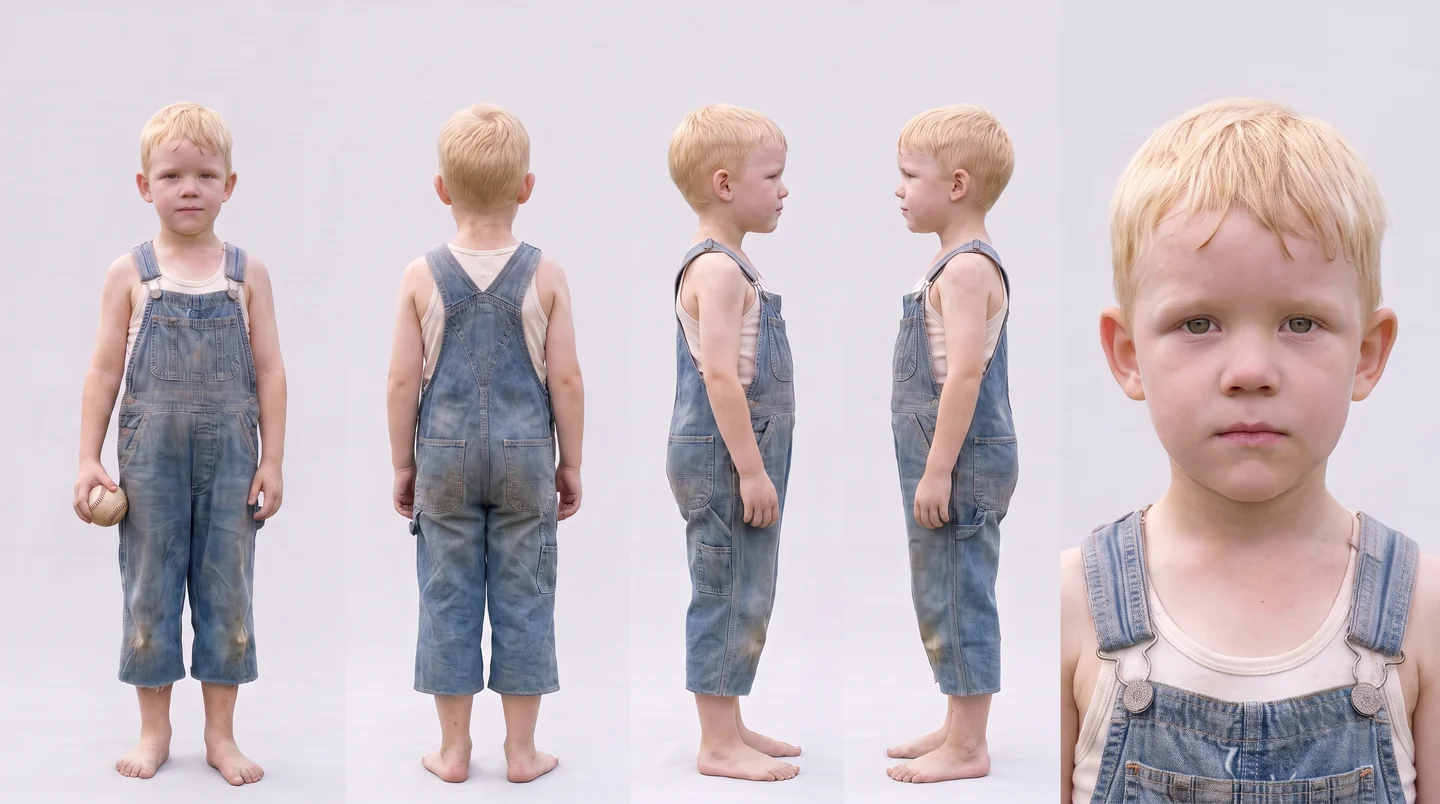
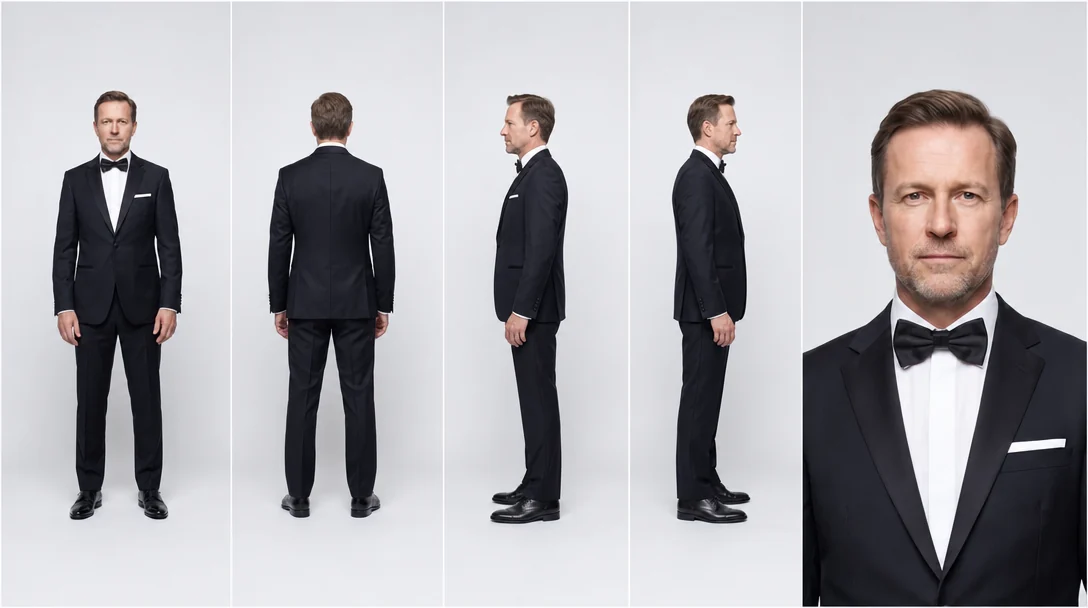
Character Studio exists to solve that. It does not make you a picture. It makes you a sheet — front, back, profile and a close-up of the same person — and that sheet is what every other lab reads from.
Three ways in
There is no single starting point, because people arrive with different amounts of an idea.
Most people start in the middle column and never leave.
The library: 69 people, not 69 types
The list is not "man", "woman", "older person". Every entry is a specific human with an age, a look and a way of carrying themselves already written into it:
Rugged outdoorsman · Triathlete · Skateboarder · College student · Fitness coach · Craftsman · New parent · Home cook · Tech reviewer · Yoga instructor · Tradesperson · Healthcare worker · Barista · Retired veteran · Gamer · Beauty creator · Everyday parent · Casual runner · Musician · Gardener · Business professional · Farmer · Student athlete · Grandparent · Surfer · Dog owner · Mechanic · Teacher · Artist · Traveler · Barber · Hiker · Fisherman · Construction worker · Bank teller · Ballet dancer · Plumber · Police officer · Tow-truck driver · Nanny · Dentist · Waiter · Pet groomer · Track athlete · Soccer player · Rugby player · Folk musician · Trucker · Club DJ · Roller derby skater · Golfer · 80s punk · 80s metal rocker · Basketball player · Football player · K-Pop artist · Delivery worker · Science professor · Rocket scientist · Astronaut
And some that exist because a specific decade has a specific face:
1977 teen · 1980s IT nerd · 1950s factory worker · 70s TV wrestler · College burnout · Tech teen
Then change who they are
On top of any starting character you set a gender and an ethnicity — thirteen of them:
Any · Black · White · Hispanic / Latino · European · African · Asian · South Asian · Southeast Asian · Middle Eastern · Indigenous · Pacific Islander · Mixed
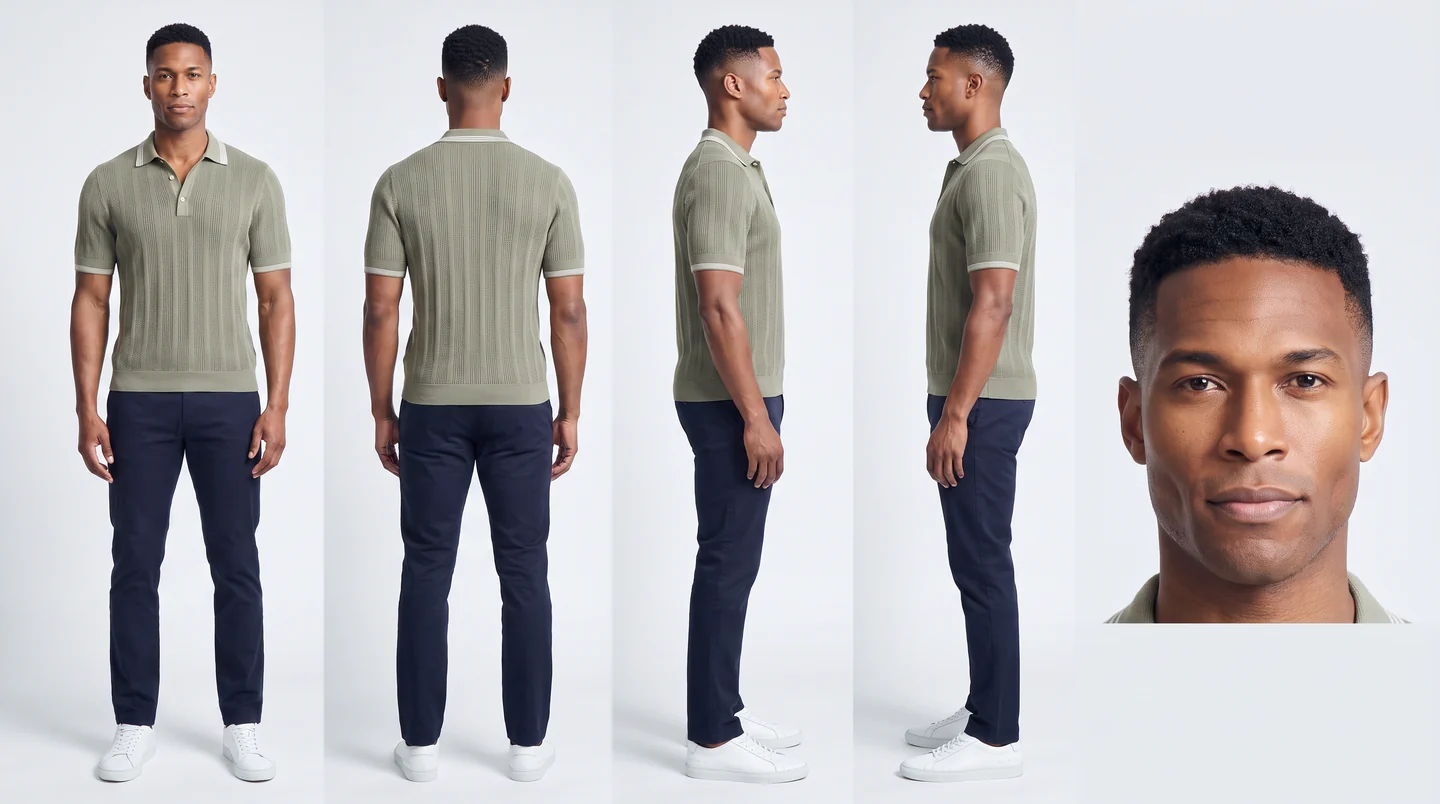
This is the part people underestimate. "Fitness coach" is not one person — it is 69 × 13 × 3 starting points before you have typed a word. The same entry becomes a completely different human depending on what you set around it.
Any is a real choice, not a blank. Leave it and you get variety across runs — useful when you are casting and do not yet know who you want.
And then override all of it
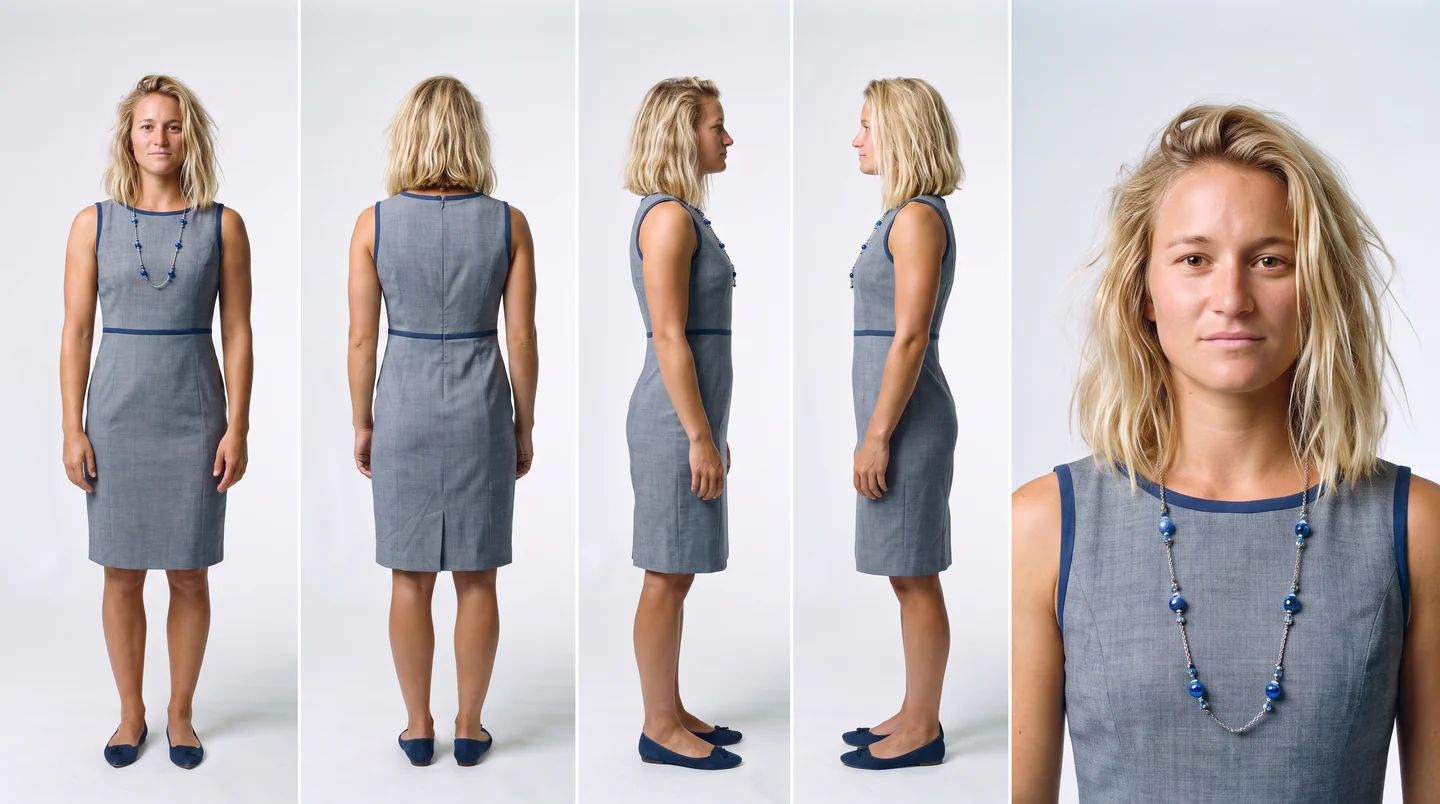
The library is a starting point you talk your way past. Type what you actually need and you get that instead, whether or not it was ever on the list.
None of these five were:
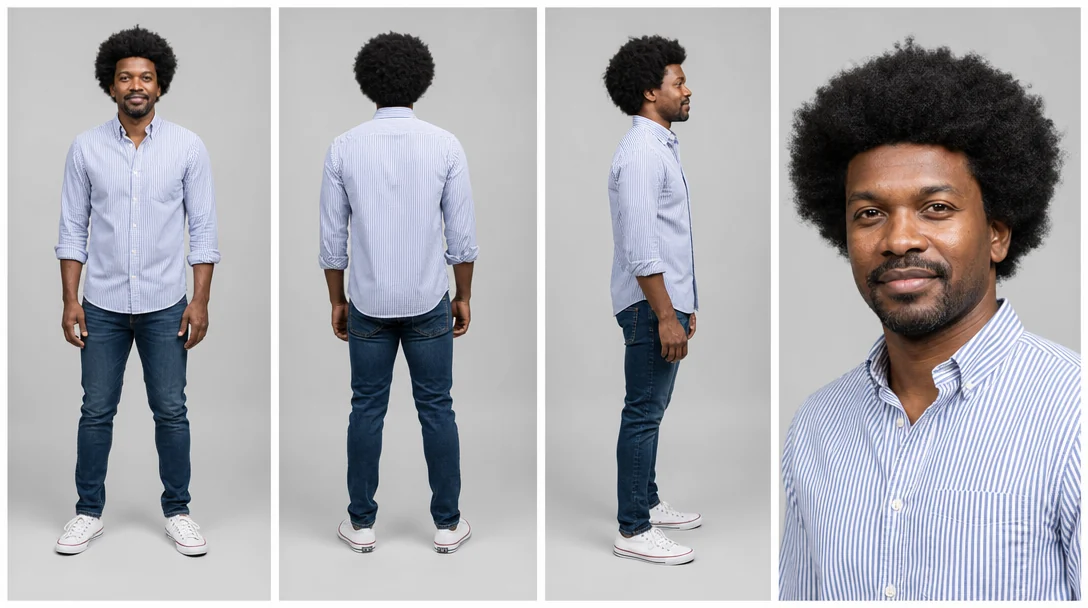
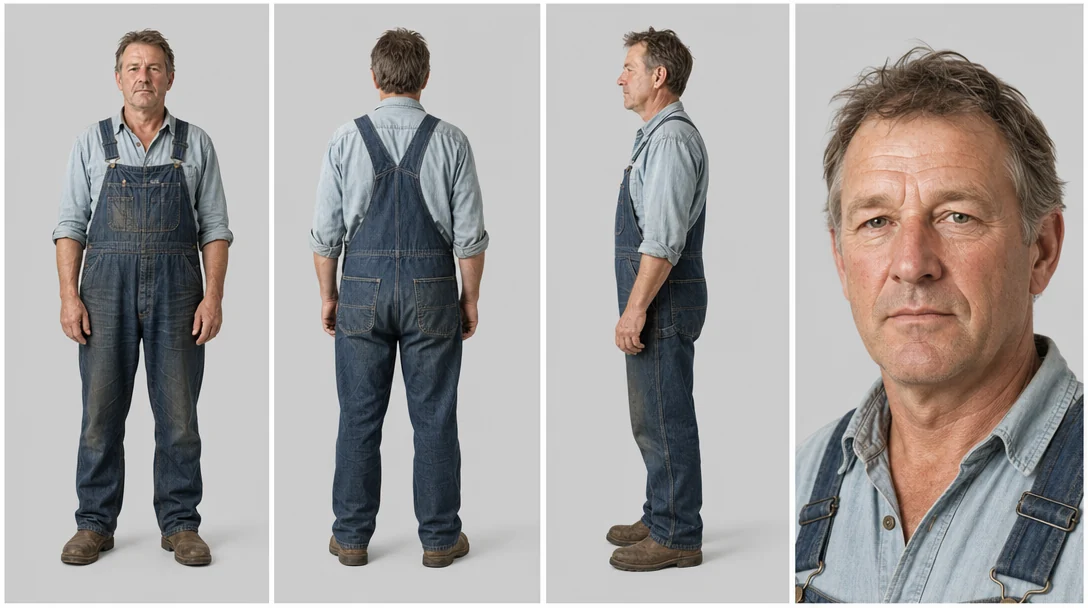
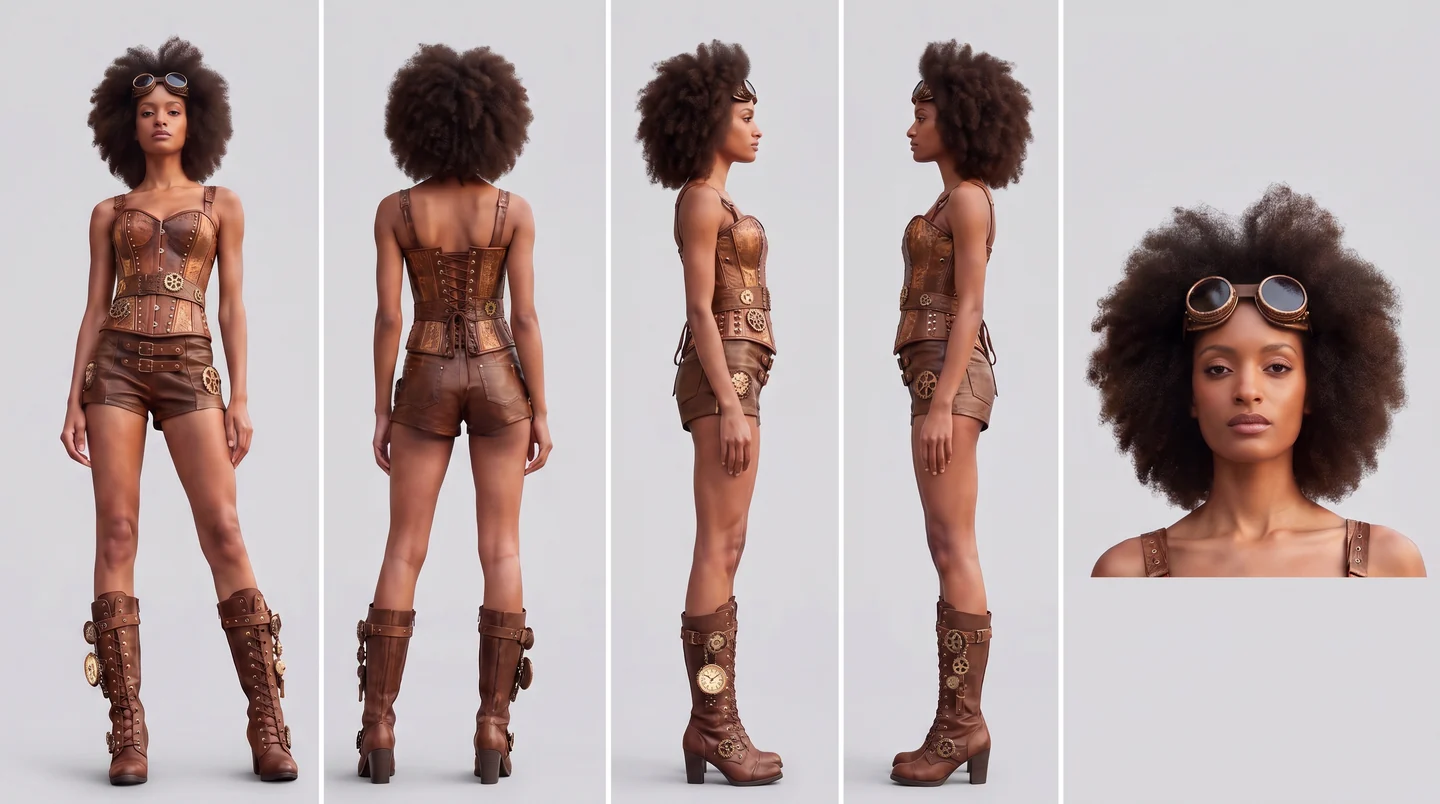
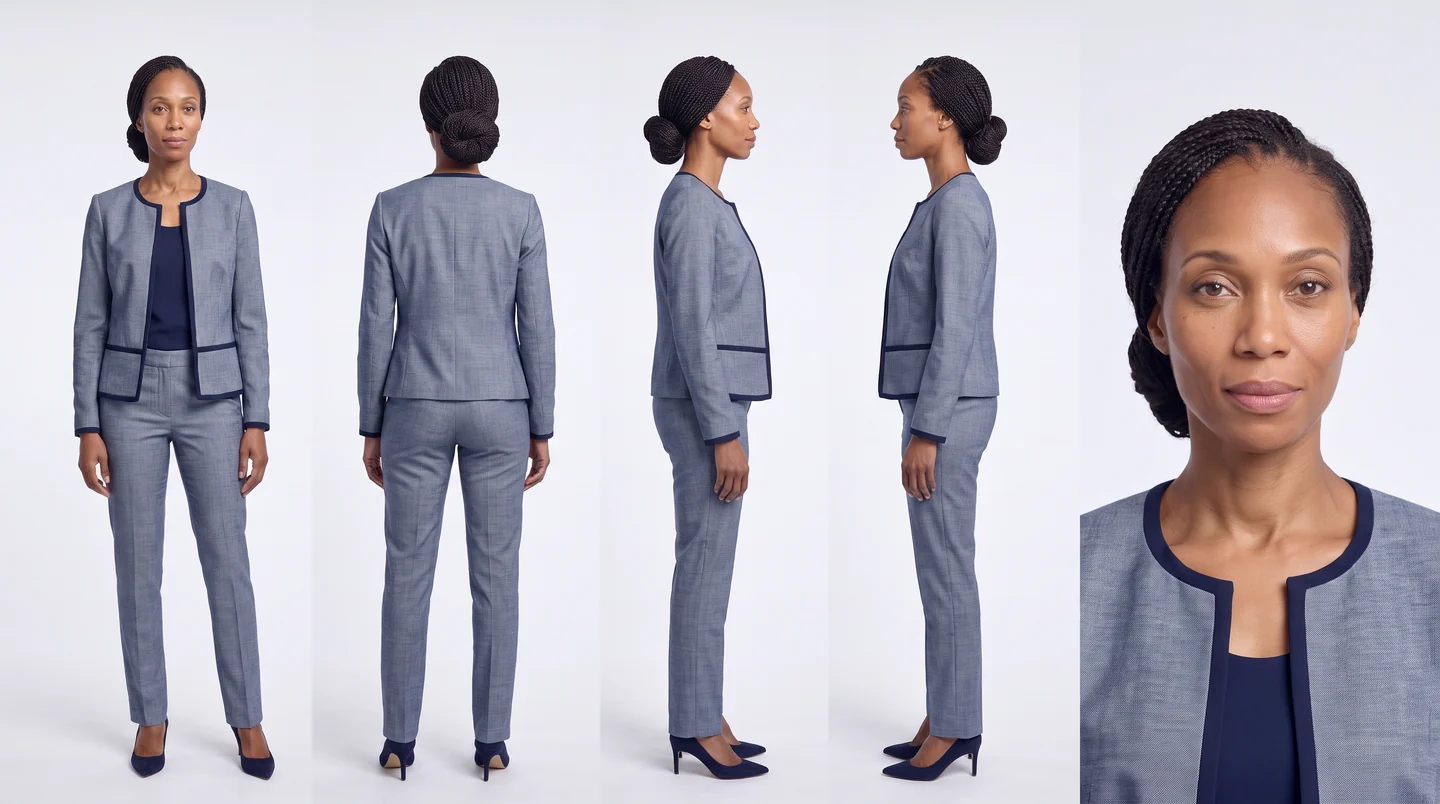
The cast is not a menu. It is a starting point you talk your way past.
Rough idea? The Boost button rewrites your description into a fuller one before you spend anything. Edit what comes back; it is yours.
Put them somewhere: 64 settings
A character sheet is the person. A setting is where you shoot them. There are 64, and they are deliberately specific — a kitchen is a kitchen, but "1976 mainframe room" is a decision:
Bright kitchen · Home gym · Car (front seat) · Living room couch · Backyard · Garage workshop · Office desk · Coffee shop · City sidewalk · Park · Beach · Commercial gym · Bathroom vanity · Bedroom · Front porch · Hiking trail · City rooftop · Poolside · Locker room · Studio apartment · Farmers market · Campsite · Lake dock · Mountain overlook · Store aisle · Art studio · Garden · Pickup truck · Semi-truck cab · Recording studio · Bike shop · Dorm room · City bus · NYC subway · Airplane (coach, business or first) · Nightclub · Dive bar · Boxing ring · Sunflower field · Basketball gym · Frat house · Police line-up
And the ones that are really period sets rather than places:
1976 mainframe room · 1924 Model-T, inside and out · Roman Coliseum · Egyptian pyramids · Unfinished skyscraper · Dubai hotels · Paris hotel with the Eiffel in the window · 1980s office
Why the sheet is the point
Once you have a sheet, the person stops being a re-roll and becomes an asset:
- The UGC Lab casts them in testimonials and two-person conversations.
- Product Lab puts your product in their hands.
That is the whole reason the studio returns four views instead of one. A single photograph of a face tells a video engine what the front looks like and nothing else; give it the back and the profile too and it stops inventing.
The front view is the one everybody checks. The three-quarter turn is the one that actually does the work — it is what teaches the engine the shape of a head rather than the look of a photo.
One thing to know before you cast
Characters this convincing are the point of the studio — and they are exactly the ones a content filter will refuse to animate. That is not a flaw in your character; it is a deepfake precaution, and the app handles it for you by moving the render to an engine that accepts real-looking faces.
It is worth understanding before your first video, because it changes which engine you should pick: Why a lifelike character sometimes renders on a different engine.