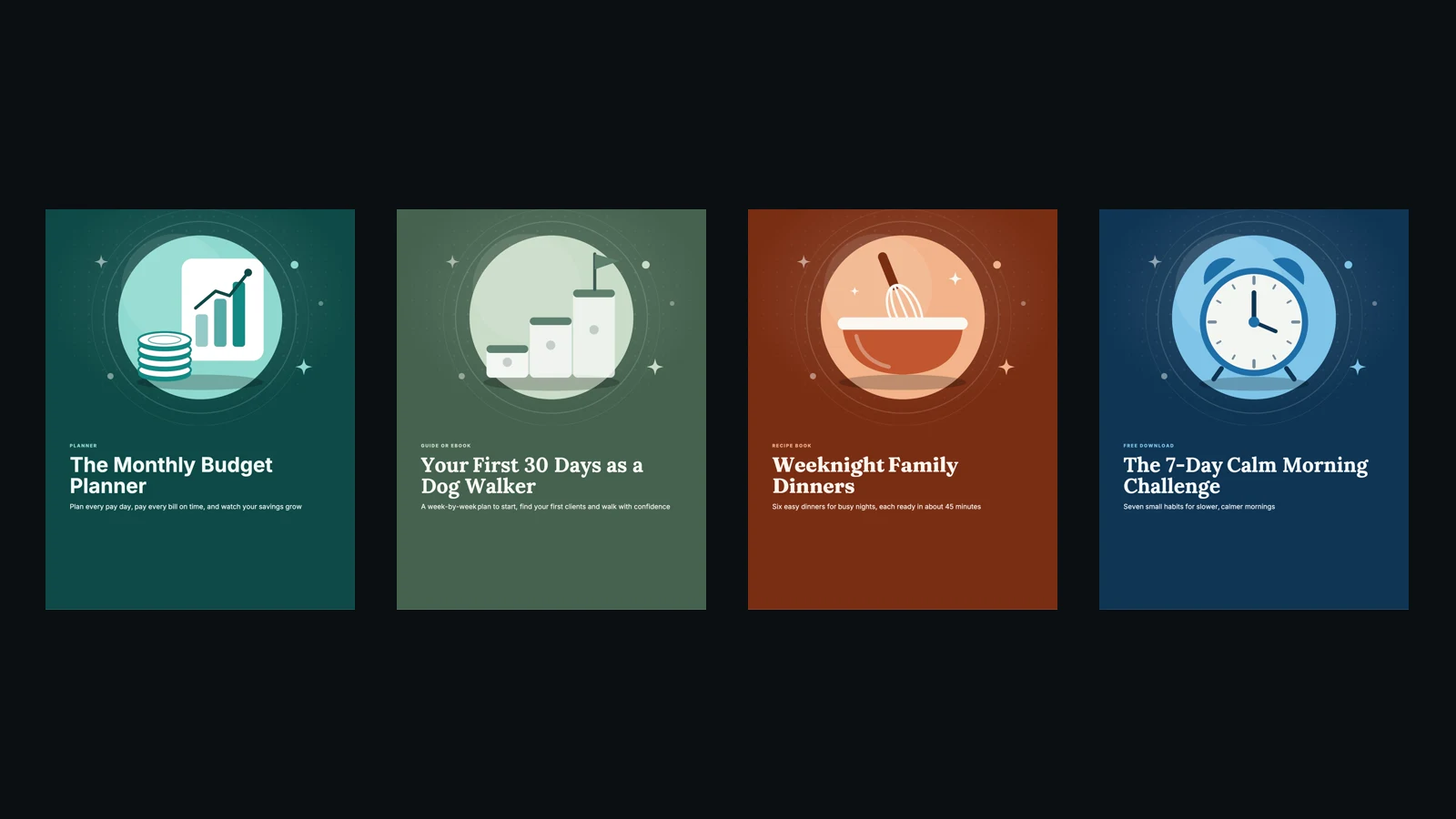
5 digital products you can make for almost nothing
No inventory, no shipping, no big upfront cost — just something you already know, turned into a file people pay for. Five down-to-earth ideas, what each one costs to make, and the honest math on what it can earn.
You don't need a big following, a studio or a pile of money to sell something online. You need one thing you know how to do, and a few evenings to write it down properly.
That's the whole trick behind digital products. A candle costs you wax, wicks, jars and postage every single time you sell one. A PDF costs you an evening once — and then the thousandth copy costs exactly what the first one did: nothing.
Here are five products almost anyone can make, what they really cost, and what they can earn.
1. A checklist or cheat sheet
The thing you wish someone had handed you. A moving-into-your-first-apartment checklist. A new-puppy shopping list. A hospital bag list for a new mom. A camping packing list. Questions to ask before you hire a contractor.
It's two to five pages, it's genuinely useful, and people buy it the moment they need it.
Costs you: one evening and about 10–15 IceBerrees.
Sells for: $3–7.
The math: at $5 you keep about $4.56 a sale. Five sales a month covers your plan; every
ten after that is about $45 in your pocket.
The catch: it's cheap, so it needs volume. It also makes a perfect free first product — the
one that brings people to your shop for the paid guide next to it.
2. A family recipe book
Grandma's recipes, finally written down. Dinners for under $10. A week of lunches a kid will actually eat. Your holiday baking, step by step. You were going to cook anyway — this just turns it into something you can sell.
Costs you: a weekend and about 30–45 IceBerrees, with pictures.
Sells for: $5–12.
The math: at $8 you keep about $7.47 a sale. Twenty sales a month is about $149.
The catch: pictures sell recipes, and every recipe has to work — test each one, and list the
common allergens. A theme ("dinners for busy weeknights") sells better than "my recipes".
3. A planner for one moment in life
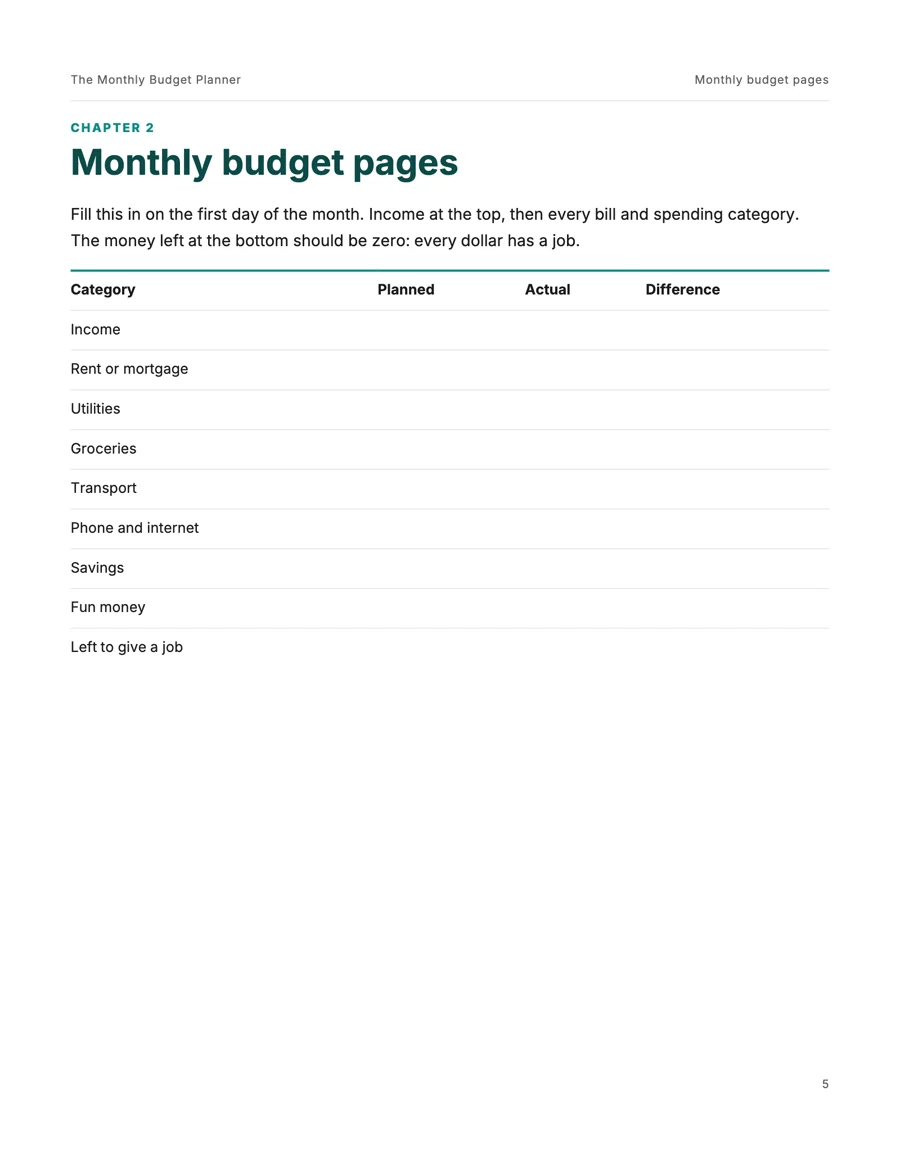
Not a planner for everyone — a planner for one moment. A wedding budget planner. A feeding and sleep log for a new baby. A chore chart for kids. A monthly budget planner for someone paying off a card. A planting calendar for a first vegetable garden.
Costs you: an evening or two and about 20–30 IceBerrees.
Sells for: $4–10.
The math: at $6 you keep about $5.53 a sale. Thirty sales a month is about $166.
The catch: general planners are one of the most crowded things you can sell. The more
specific yours is, the easier it is to find — and the more the right person feels it was made for them.
The Monthly Budget Planner: income, every bill, and the money left over.
4. A 7-day challenge
Seven days, one small step each day. A calm-morning challenge. A no-spend week. A declutter-one-room challenge. A beginner's walking plan. Challenges work because they promise something small and finishable — and people love finishing things.
Costs you: an evening or two and about 25–35 IceBerrees.
Sells for: $5–12 — or free, as the thing that introduces people to you.
The math: at $7 you keep about $6.50 a sale. Twenty-five sales a month is about $160.
The catch: it has to be doable. If day three takes an hour, nobody gets to day four.
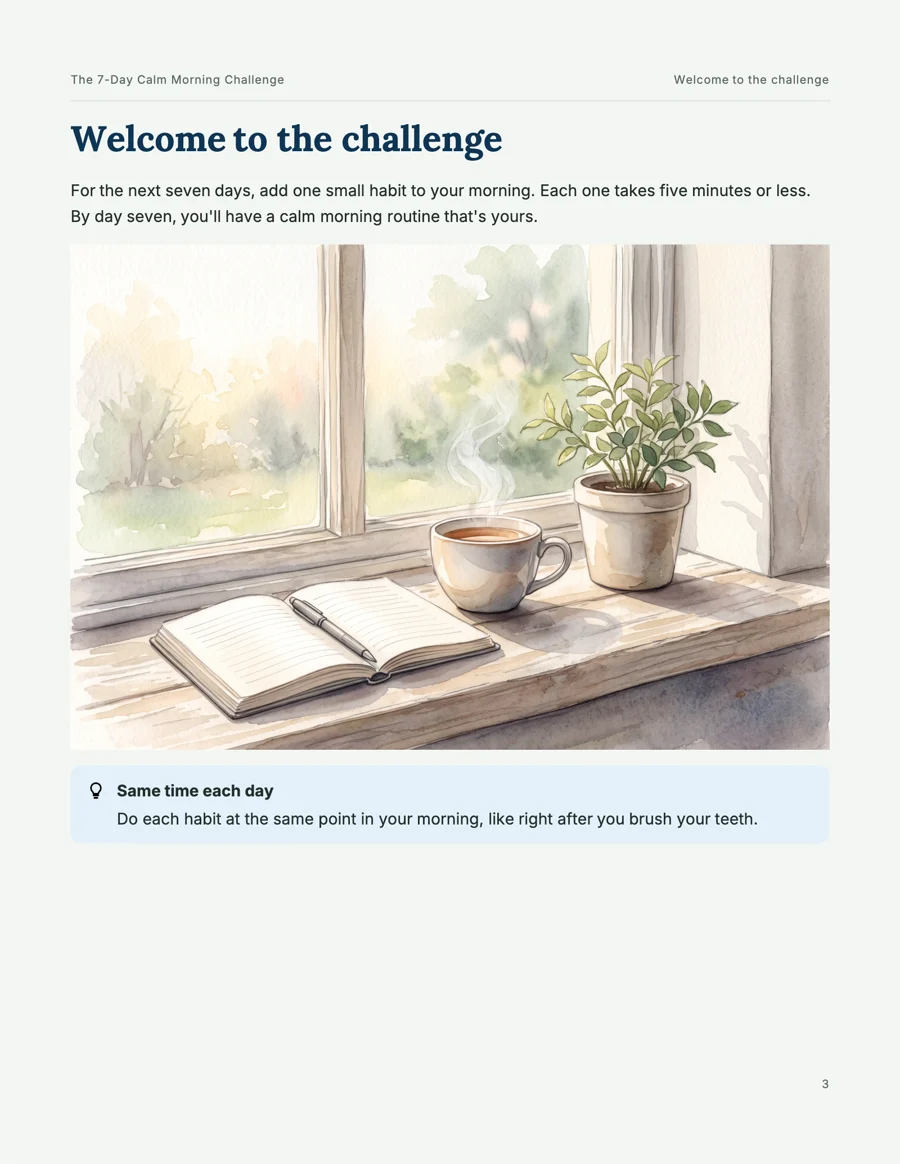
The 7-Day Calm Morning Challenge: one five-minute habit a day.
5. A beginner's guide to your job or hobby
The one that takes the most work — and earns the most. What you learned the hard way, in the order someone new needs it. Your first month as a dog walker. How to price your handmade candles. How to start a vegetable garden in pots. How to get your first three cleaning clients.
Costs you: a week of evenings and about 40–50 IceBerrees.
Sells for: $9–19.
The math: at $12 you keep about $11.35 a sale. Fifteen sales a month is about $170.
The catch: people buy a result, not information. Put the promise in the title — *Your First
30 Days as a Dog Walker* tells a buyer exactly what they get.
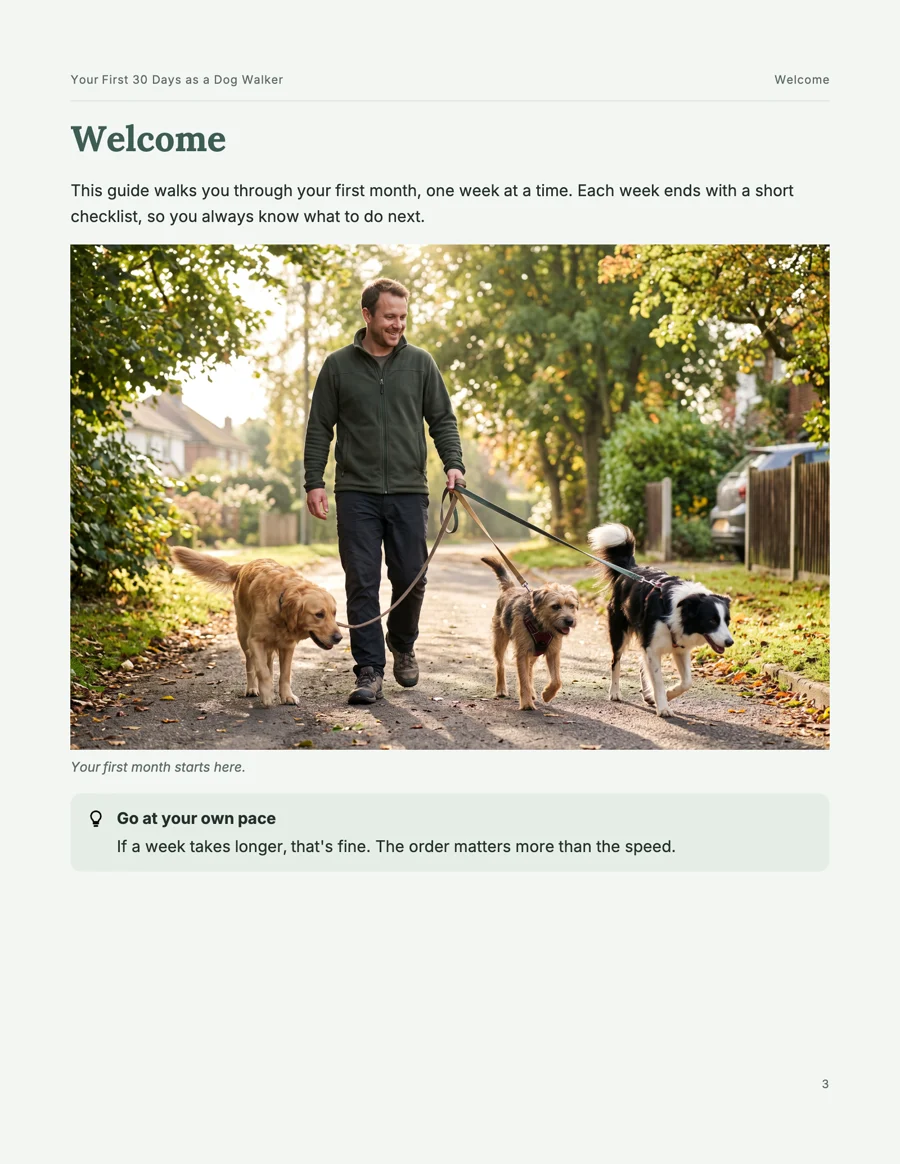
Your First 30 Days as a Dog Walker: one week at a time, with a checklist at the end of each.
All five, side by side
Product
Costs you
Sells for
You keep a sale
Sales to pay for the month
Checklist or cheat sheet
1 evening
$5
$4.56
5
Family recipe book
A weekend
$8
$7.47
3
Planner for one moment
1–2 evenings
$6
$5.53
4
7-day challenge
1–2 evenings
$7
$6.50
3
Beginner's guide
A week of evenings
$12
$11.35
2
The last column is how many sales it takes to cover a $19 plan. After that, it's yours.
How to sell them without spending more
Open your shop. Your IceBerree Shop is free with your plan: your own page
on iceberree.com, with 0% IceBerree fees.
Show the pages. The Digital Products Lab's Sell step makes your store pictures, a page-flip
video and a free sample for nothing — buyers can't flip through a PDF before they pay, so show them.
Give one thing away. A free checklist next to a paid guide turns visitors into buyers.
Share where your people already are. Post your pictures to Pinterest, Instagram and TikTok,
and put your shop link in your bio.
Be patient. The first sale usually takes weeks, not hours. The second product is easier
than the first, and products for the same people help each other sell.
The honest part
None of this is a get-rich-quick plan. Most people's first products sell a few copies a month at first, and that's normal. What makes digital products different is what happens over time: every product you make keeps working while you make the next one.
So pick the thing you know. Open the Digital Products Lab. Make the first one this week.