What actually sells, what each one goes for, how long it takes to make — and the honest catch with every one. Ranked for regular people with a skill and a few evenings, not for gurus.
A digital product is something you make once and sell again and again. There is nothing to ship, nothing to store, and nothing to restock. Once it exists, almost all of the price is yours.
That makes digital products one of the few businesses a regular person can start in a weekend. But they are not all equal. Some sell all year; some sell for a week in December. Some take an evening; some take a month. Some are so crowded that a new seller is invisible.
So we ranked them on four things that matter to someone starting out:
Steady demand — people look for it all year, not just once.
An easy yes — the price is small enough that buyers don't think twice.
Doable alone — one person can make the first one in a weekend or two.
Room to stand out — there is a way to be the obvious pick for someone.
1. Printable planners and trackers
Budget planners, meal planners, habit trackers, chore charts, wedding planners, garden planners. People buy a new one every year, and every January brings a fresh wave of them.
What it sells for: usually $3–15. Big yearly bundles go higher.
What it takes: a weekend.
The catch: this is a crowded shelf. "2026 Planner" competes with thousands of others.
"A meal planner for families with one picky eater" competes with almost nobody — and the people it's for will find it and feel it was made for them.
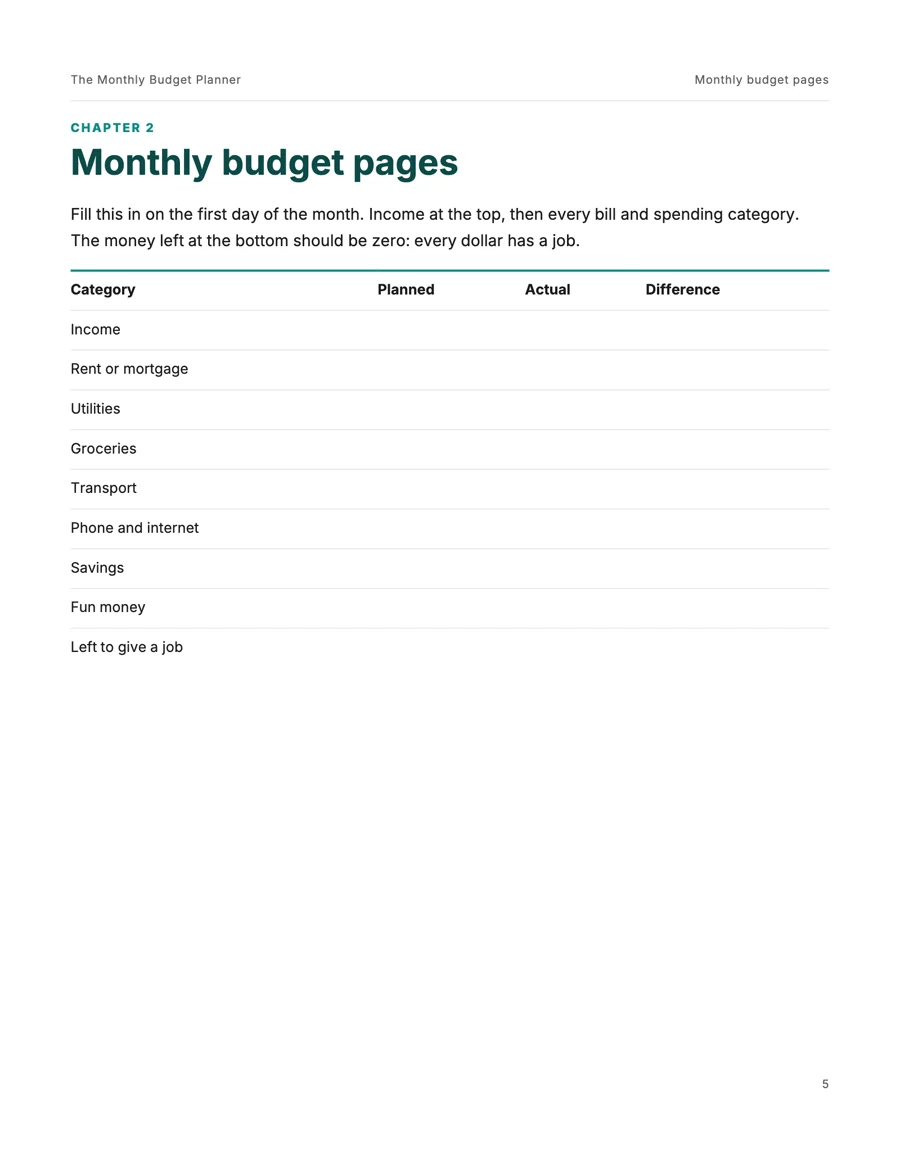
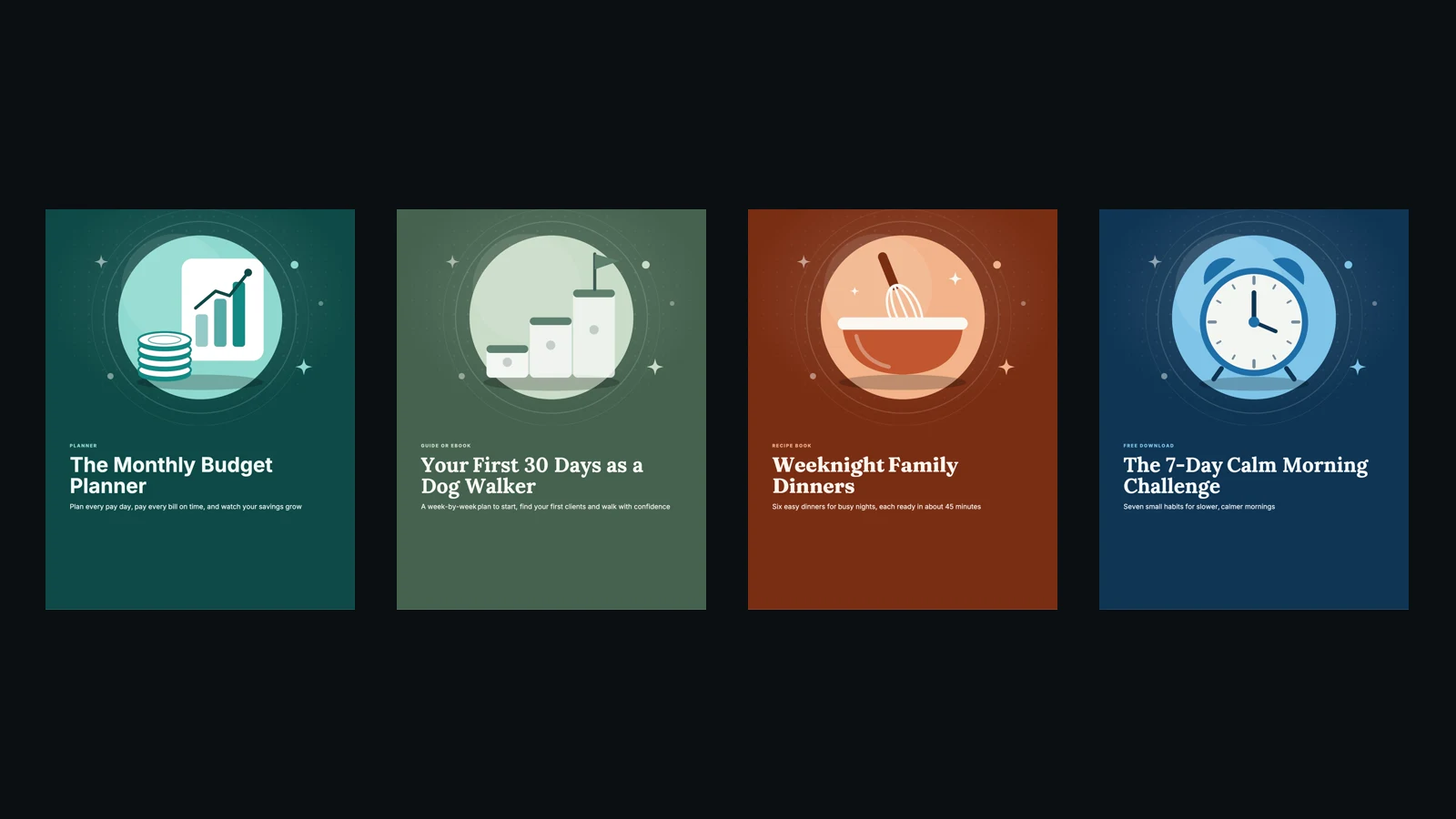
A page from The Monthly Budget Planner, made in the Digital Products Lab — planned, actual and difference for every category.
2. How-to guides and short e-books
Everything you know how to do is something someone else wants to learn. How to start walking dogs for money. How to price your cakes. How to plan a road trip with toddlers. Your experience is the product — the guide is just the package.
What it sells for: $7–29, depending on how much it saves the buyer.
What it takes: a week of evenings.
The catch: people don't buy information; they buy a result. Put one clear promise in
the title — Your First 30 Days as a Dog Walker sells better than Dog Walking Tips.
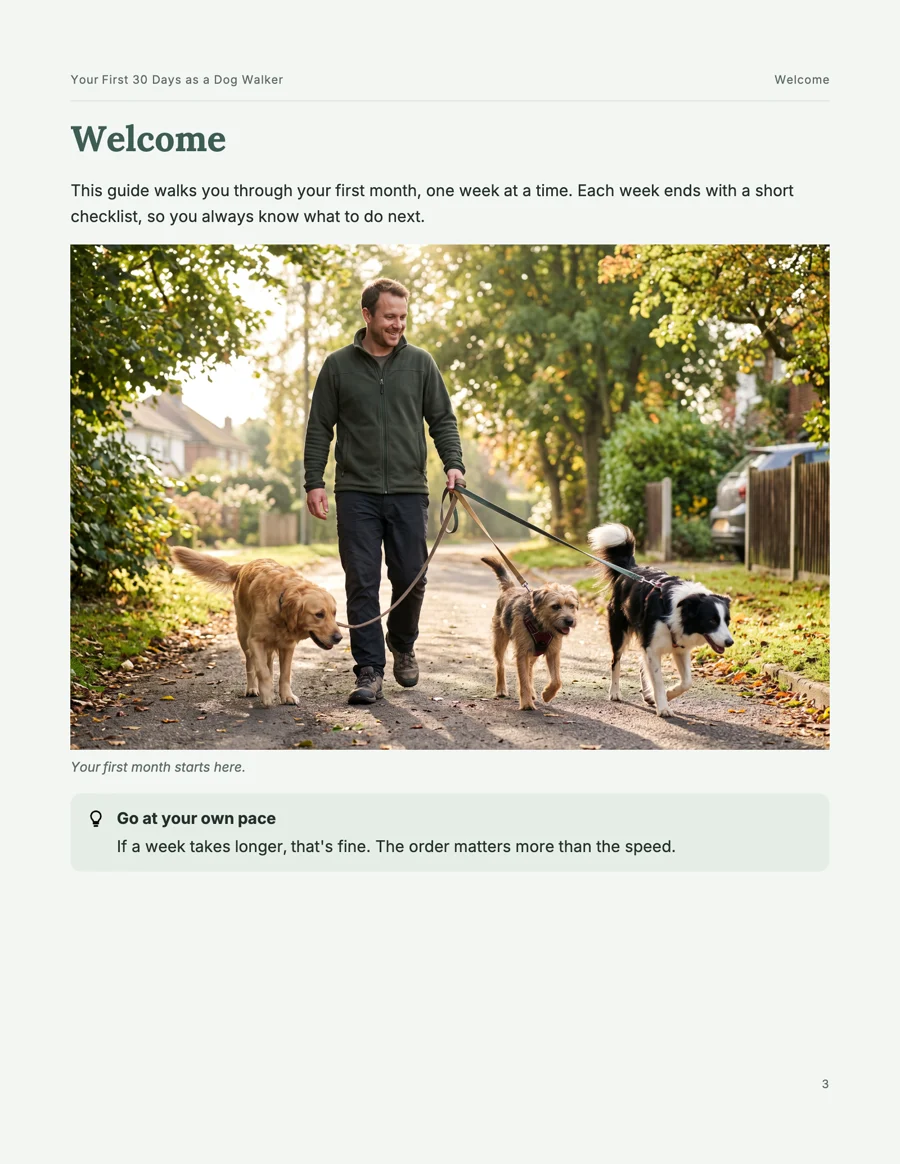
From Your First 30 Days as a Dog Walker — one week at a time, with a short checklist at the end of each.
3. Templates people fill in
Résumés, invoices, price lists, client forms, budget sheets, social media post layouts, seating charts. Templates sell because they save someone an afternoon of staring at a blank page.
What it sells for: $5–25.
What it takes: a weekend.
The catch: a template is only worth what it saves. Say exactly what it opens in and how
long it takes to fill out, and show a finished example so buyers can picture theirs.
4. Worksheets and classroom resources
Teachers and homeschooling parents buy all year, with the biggest rushes before school starts and again in January. A single worksheet is cheap; a full unit is not.
What it sells for: $2–10 for a single resource; $15–30 for a bundle or unit.
What it takes: an evening per worksheet.
The catch: teachers search by grade and skill. "3rd grade fractions on a number line"
beats "math worksheets" every time. Say who may use it, too: one teacher, or a whole school.
5. Recipe books and meal plans
Recipes are free online, so a recipe book has to be more than recipes. Sell the plan around them: a week of dinners with one shopping list, a family's best holiday baking, meals that cost under $10, lunches a kid will actually eat.
What it sells for: $5–15.
What it takes: a weekend, plus the cooking you were going to do anyway.
The catch: good pictures sell recipes, and every recipe has to work. Test them, and
list the common allergens.
6. Kids' activity and coloring pages
Holiday packs, rainy-day packs, road-trip packs, busy books. Parents and grandparents buy them at the exact moment they need them, which makes them an easy yes.
What it sells for: $3–10.
What it takes: an evening or two.
The catch: the price is low, so one page is never the product — a themed pack is. And
print every page before you sell it, to make sure it looks right on a home printer in black and white.
7. AI art and wall-art prints
A set of prints for a nursery, a kitchen, an office. A vintage travel series. Botanicals in one color palette. People buy the file, print it at home or at a print shop, and frame it.
What it sells for: $3–15 a print; more for a matching set.
What it takes: an evening.
The catch: this is the most crowded category on the list, so sell a *collection with a
point of view*, not single pictures. And know this: in the US, the Copyright Office has said that a picture made entirely by AI can't be copyrighted, so others may be able to copy it. What you add yourself — choosing, arranging, editing, adding your own words — is what makes a set yours.
8. Mini-courses and video lessons
A short course is the highest-priced item on this list because it does the most: it shows, not just tells. Think a handful of short videos and a workbook, not forty hours of lectures.
What it sells for: $19–99.
What it takes: two to four weekends.
The catch: a course asks buyers to trust you, so it sells best to people who already
liked something free from you — a checklist, a guide, a sample.
9. Photo, video and social media packs for small businesses
A realtor wants a month of ready-made posts. A coffee shop wants twenty pictures that look like one photo shoot. A wedding planner wants short clips for their page. Small businesses pay for anything that makes them look professional without hiring someone.
What it sells for: $10–40 a pack.
What it takes: a weekend.
The catch: buyers want a set that matches — the same light, the same colors, the same
style. Twenty pictures that belong together are worth far more than fifty that don't.
10. Software, plugins, presets and sound packs
If you make apps, music plugins, sample packs or presets, you already know this market: buyers pay well and come back for the next one.
What it sells for: $10–99, sometimes more.
What it takes: months, for the software itself.
The catch: buyers expect it to install cleanly and expect help when it doesn't. Because
programs can carry harmful code, IceBerree Shop checks software sellers and every new version before buyers get it.
The whole list at a glance
Product
Typical price
First one takes
How crowded
Printable planners and trackers
$3–15
A weekend
Very — pick a niche
How-to guides and short e-books
$7–29
A week of evenings
Room for you
Templates people fill in
$5–25
A weekend
Medium
Worksheets and classroom resources
$2–30
An evening each
Medium
Recipe books and meal plans
$5–15
A weekend
Medium
Kids' activity and coloring pages
$3–10
An evening or two
Medium
AI art and wall-art prints
$3–15
An evening
Very
Mini-courses and video lessons
$19–99
2–4 weekends
Room for you
Photo, video and social packs
$10–40
A weekend
Room for you
Software, plugins and sound packs
$10–99+
Months
Specialist
So which one should you start with?
Start with the one closest to something you already know. A nurse's shift planner, a baker's pricing sheet, a teacher's worksheet, a dog walker's first-month guide. What you know is the part nobody else can copy.
Then three habits make the biggest difference:
Give one thing away. A free sample or a free checklist is how strangers learn to trust you.
Stay in one lane. Three products for the same kind of buyer beat ten products for ten kinds.
Show what's inside. Buyers can't flip through a PDF before they pay, so show them the pages.
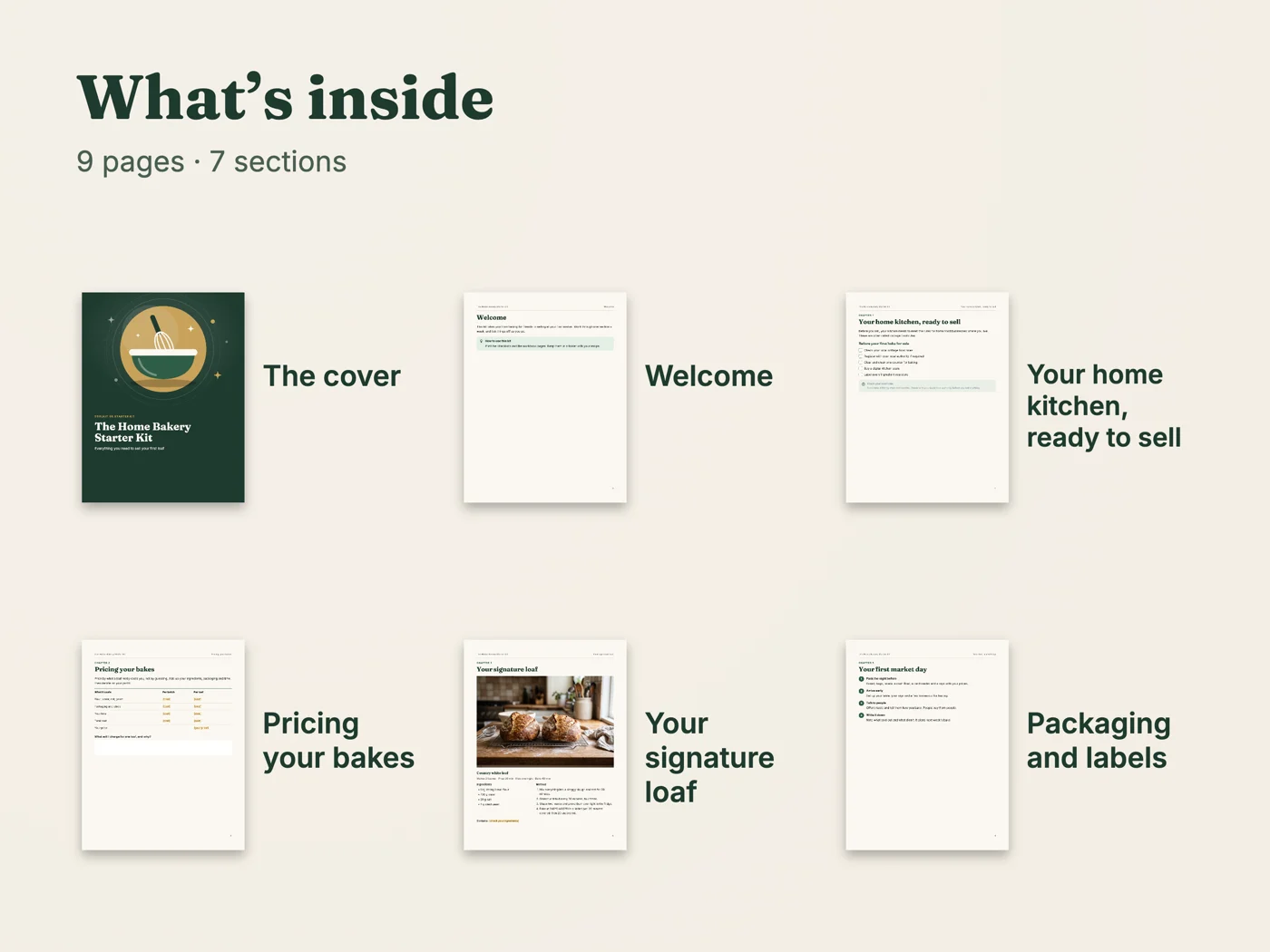
A \"What's inside\" store picture, made for free by the Digital Products Lab's Sell step.
What it costs to make one with IceBerree
The Digital Products Lab writes and lays out guides, planners, recipe books, checklists and workbooks with you, then downloads them as a print-ready PDF. It comes with every paid plan; plans start at $19 a month with 600 IceBerrees. Every button shows its price before you press it:
Step
Cost
The outline
Free
Each written section
3 IceBerrees
Each AI picture
5 IceBerrees
The words for your listing (titles, description, tags)
5 IceBerrees
The PDF, store pictures, page-flip video, buyer files and free sample
Free
A nine-page guide with six sections, four pictures and the listing words comes to about 43 IceBerrees — a small part of a single month's plan.
Then sell it in your own IceBerree Shop: your own shop page on iceberree.com, 0% IceBerree fee, and only Stripe's usual card fee — about 2.9% + 30¢ a sale. On a $9 guide, you keep about $8.44.
Pick the thing you know. Make the first one this weekend. Then make the second one for the same people.